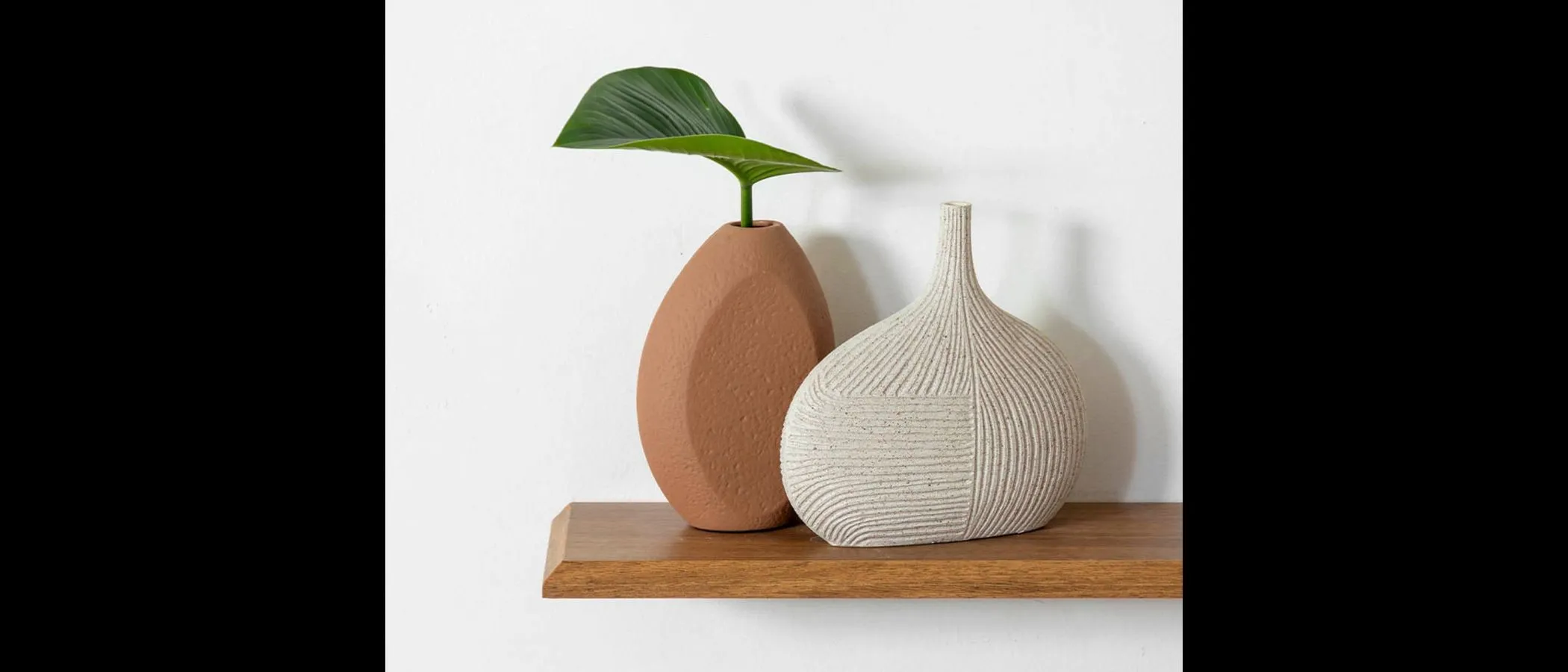
The Art of Ceramics - Shaping Earth, Fire, and Time
Ceramics is one of humanity’s oldest artistic and utilitarian expressions. Originating in Prehistory, when people discovered that clay hardened when exposed to fire, it has crossed millennia, combining the rawness of natural elements with the sophistication of contemporary design.
More than the making of objects, ceramics is a process of physical and chemical transformation, where earth, water, air, and fire come together.
The Four Elements of Creation
To understand ceramics, it is necessary to understand the role of each element in its production process:
Earth (Clay): The starting point. There are different types of clay (such as terracotta, stoneware, and porcelain), each with specific textures, colors, and firing temperatures.
Water: The element that gives clay plasticity, allowing it to be shaped by the artisan’s hands.
Air: The slow drying process is crucial. If the piece goes into the kiln with excess moisture, the water evaporates quickly and causes the object to explode.
Fire: Firing (which can exceed 1200°C) transforms moldable clay into a permanent ceramic material, fusing its minerals.
Main Techniques: From Handbuilding to the Wheel
The versatility of ceramics lies in the countless ways it can be worked. The most traditional techniques include:
Handbuilding (Pinch Pot and Coiling): Ancestral techniques in which the object is shaped directly with the fingers or through stacked coils of clay. They give each piece an organic and unique character.
Slab Building: The clay is rolled out with a rolling pin (like dough) and cut to form more geometric and utilitarian structures.
Potter’s Wheel: One of the most fascinating techniques, where clay spins on a wheel and the ceramist uses hand pressure to raise symmetrical, fluid forms, such as vases and mugs.
Aesthetics and Finishing
After the first firing (called bisque), the piece gains strength but remains porous. This is when the alchemy of minerals comes into play: glazing.
Ceramic glazes are mixtures of powdered minerals that, when fired at high temperatures, melt and form a glassy layer over the piece. In addition to making the object waterproof (and therefore safe for food use), the glaze defines the final color, shine, and texture, turning each piece into a visual and tactile work of art.
The Charm of Imperfection: Wabi-Sabi
In Japanese culture, ceramics are closely tied to the philosophy of Wabi-Sabi, which finds beauty in imperfection, asymmetry, and the marks of time. Kintsugi, for example, is the art of restoring broken ceramics with lacquer mixed with gold powder, celebrating the object’s history rather than disguising its cracks.
A Rebirth in the Digital Age
In an increasingly virtual and fast-paced world, ceramics is experiencing a true renaissance. Handmade ceramics studios are multiplying in urban centers, attracting people who want to disconnect from screens and reconnect with hands-on work.
Ceramics teaches us patience. You cannot speed up the clay’s time or the kiln’s cooling process. Each piece carries the time of the person who made it, becoming a statement of slowing down and being present in the contemporary world.